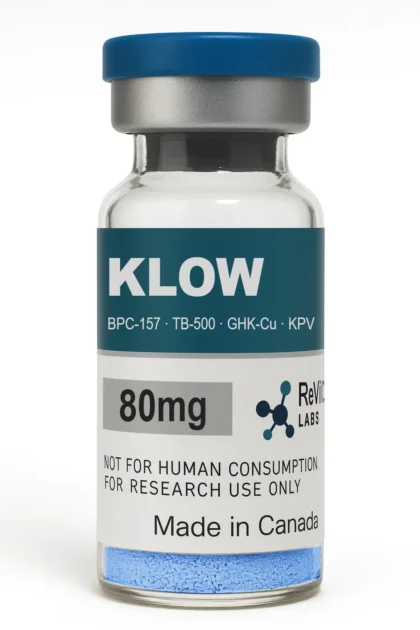
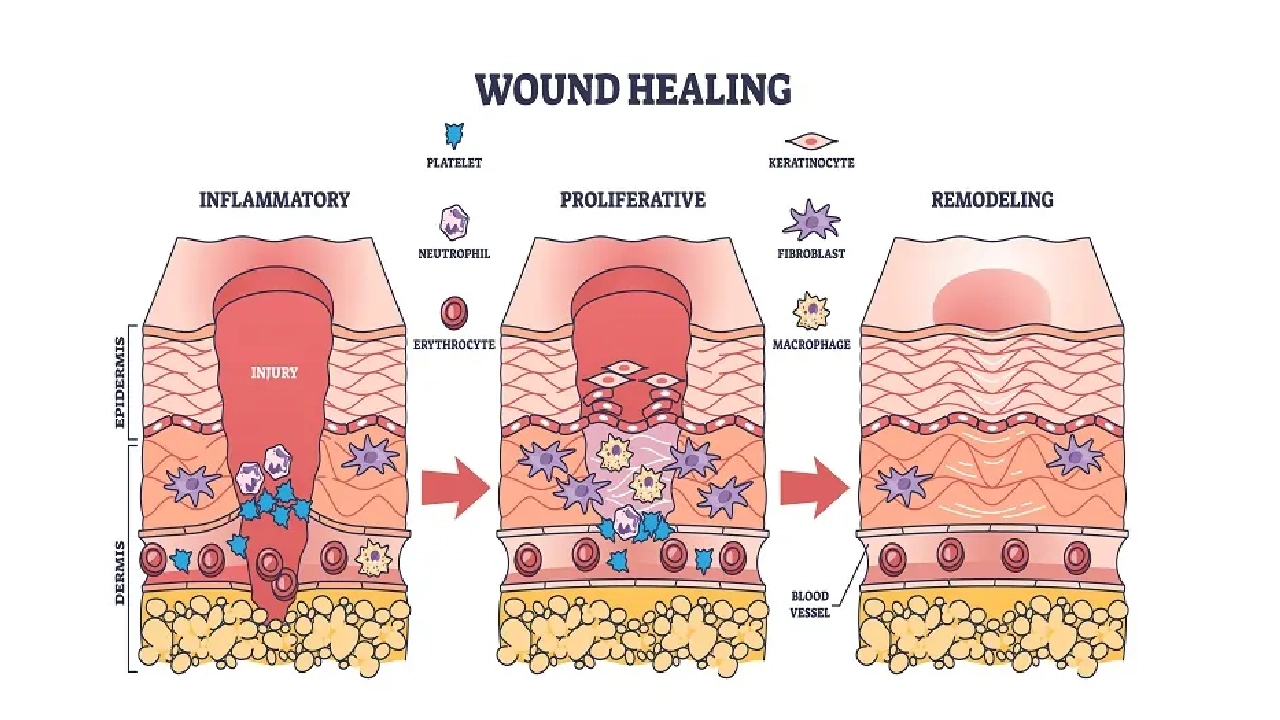
Several short peptides appear repeatedly in published tissue-repair and inflammation research. Below is a brief overview of four of them, what they are, and the kinds of research models they have been studied in.
BPC-157
A synthetic 15-amino-acid peptide whose sequence is derived from a protein found in gastric juice. It has been studied in animal and cell models of tendon, ligament and gastrointestinal tissue, and in angiogenesis signalling research.
TB-500
A synthetic fragment related to thymosin beta-4, a protein involved in actin regulation. Research has focused on cell-migration and tissue-model studies.
GHK-Cu
A copper-binding tripeptide (glycyl-histidyl-lysine). It is widely used in cosmetic-science and cell-culture research on collagen and extracellular-matrix signalling.
KPV
A tripeptide corresponding to the C-terminal end of alpha-melanocyte-stimulating hormone (α-MSH). It has been studied in inflammation-signalling models.
Related research compounds
Independent Janoshik lab reports for these products are available on each product page and on our Lab Testing page.
All ReVICO Labs products are supplied for laboratory research use only. They are not for human or veterinary consumption and are not approved by Health Canada for therapeutic or diagnostic use.